
TOTEN Co.
Choosing the right server cabinet is not simply a matter of finding a metal enclosure that fits your equipment. Server rack dimensions affect installation, airflow, cable management, equipment compatibility and future expansion. A cabinet that looks spacious from the outside may still be unsuitable if its mounting depth is too short or its usable height is insufficient.
For IT managers, data center planners and equipment buyers, understanding rack width, depth, height and rack units is an important first step. This guide explains the main measurements, common sizing options and practical considerations for selecting a server rack.
1. What Are Standard Server Rack Dimensions?
Most professional server racks are designed around the 19-inch rack standard. This refers to the nominal mounting width used by compatible IT equipment, rather than the external width of the complete cabinet.
The overall dimensions of a server rack are generally expressed as width × depth × height. For example, a cabinet described as 600 × 1000 × 2055 mm has an external width of 600 mm, an external depth of 1000 mm and an overall height of 2055 mm, subject to the manufacturer's stated measurement method.
Three dimensions should be considered separately:
Width: The external cabinet width and the space available for mounting rails, accessories and cable routing.
Depth: The external front-to-back measurement, which must accommodate equipment and allow sufficient room for connections and maintenance.
Height: The overall cabinet height, which is different from its usable equipment mounting height.
These measurements are related, but they are not interchangeable. Before placing an order, confirm the external dimensions and the usable installation space in the manufacturer's technical drawing.
2. Understanding 19-Inch Server Rack Width
A 19-inch server rack is designed for equipment with a nominal 19-inch mounting interface. Nineteen inches equals 482.6 mm. This does not mean that the cabinet itself is only 482.6 mm wide.
The cabinet must also accommodate vertical mounting rails, structural components, doors and other accessories. Consequently, common external cabinet widths include 600 mm and 800 mm.
600 mm Server Racks
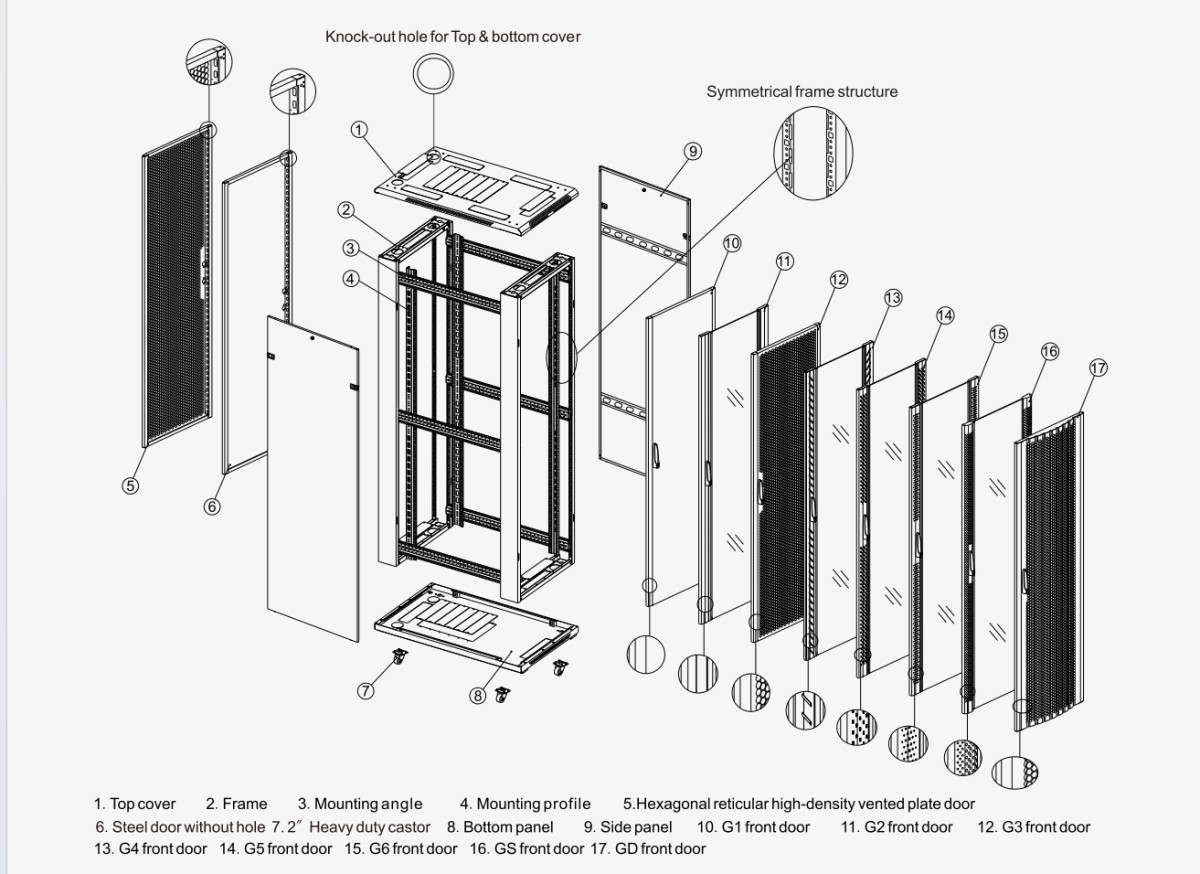
A 600mm server rack is a practical choice where floor space is limited. It can suit many conventional server rooms, network closets and IT installations that require a relatively compact cabinet footprint.
This width may be appropriate when the primary requirement is mounting compatible equipment without needing extensive additional side space. However, buyers should check how power cables, network cables and accessories will be routed before deciding that a narrower cabinet is sufficient.
800 mm Server Racks
An 800mm server rack provides additional lateral space outside the nominal 19-inch mounting interface. This can be helpful in installations with dense cabling, multiple network connections or more demanding cable-management requirements.
The extra width does not automatically increase the number of rack units available. Instead, it gives system designers more flexibility to organize cables and accessories, depending on the cabinet's internal construction.
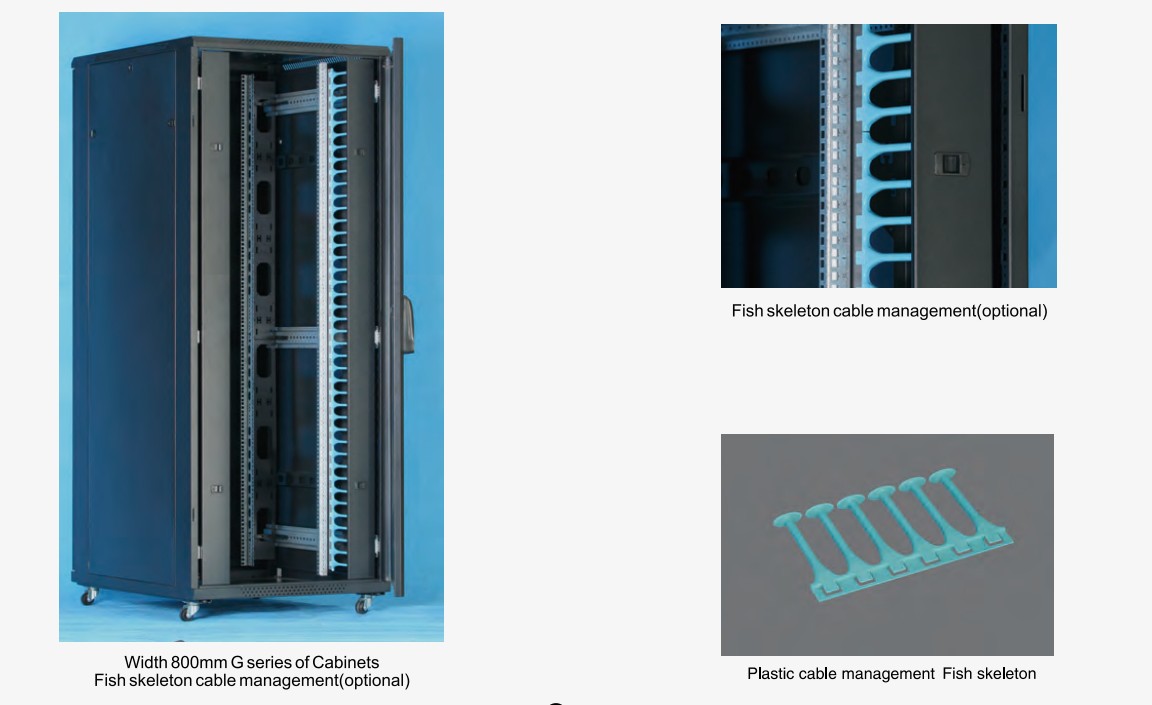
The TOTEN G Series includes 600 mm and 800 mm width options. Selecting between them should depend on equipment layout, available floor space and the planned cable-management arrangement.
3. How Deep Should a Server Rack Be?
Server rack depth is one of the most important specifications to check before purchasing a cabinet. The correct depth depends on the physical dimensions of the equipment, the mounting arrangement and the clearance required at the front and rear.
A cabinet that is too shallow may prevent a server from being installed correctly or leave insufficient space for power connectors and network cables.
Common cabinet depth options include 600 mm, 800 mm, 900 mm, 1000 mm, 1100 mm and 1200 mm. The appropriate choice varies by application and product range.
A useful starting point is to measure the deepest equipment that will be installed. Then consider the additional space required for mounting rails, cable bends, power connections and rear access.
For example, a 1000mm deep server rack may be suitable for many standard server installations, while a deeper cabinet can provide more flexibility for equipment with longer chassis or more demanding rear-cable arrangements. The equipment manufacturer's installation requirements should always take priority over general sizing recommendations.
It is also important to distinguish external cabinet depth from usable mounting depth. A nominal 1000 mm cabinet does not necessarily provide 1000 mm between the front and rear mounting rails. Door construction, rail positions and other components affect the available space.
4. Understanding Rack Units: What Does 42U Mean?
Rack height is commonly described using rack units, abbreviated as U. One rack unit equals 1.75 inches, or 44.45 mm, in nominal equipment mounting height.
The calculation is straightforward:
1U = 44.45 mm
2U = 88.9 mm
4U = 177.8 mm
42U = 1,866.9 mm of nominal mounting height
A 42U server rack can therefore accommodate equipment occupying a combined nominal height of 42 rack units, provided that the equipment, accessories and installation requirements are compatible.
The total external cabinet height will be greater than the nominal mounting height because the enclosure also includes its frame and other structural components. Feet, casters and other accessories may further affect the overall height.
Common rack capacities include 18U, 22U, 27U, 32U, 37U, 42U and 47U. Smaller cabinets can suit limited installations, while taller cabinets provide more room for equipment and planned expansion.
When calculating the required capacity, do not use every available U position as an assumed equipment position. Some space may be needed for cable management, blanking panels, airflow arrangements or future additions.
5. How to Choose the Right Server Rack Size
A reliable sizing decision starts with an equipment list rather than a cabinet catalogue.
First, record the height, width and depth of each server, switch, patch panel and other rack-mounted device. Confirm that the equipment is designed for a compatible mounting interface and note any special rail or bracket requirements.
Second, calculate the total U capacity. Add the rack heights of all planned equipment and leave a reasonable allowance for future expansion. A cabinet that is completely full on installation day may be difficult to maintain or expand later.
Third, check the available installation area. Measure door openings, corridors and the intended cabinet position. Consider whether technicians need access to the front, rear and sides of the enclosure.
Finally, review ventilation, cable routing, power distribution and load requirements. The cabinet must suit not only the equipment's dimensions but also the way the equipment will operate in practice.
6. What to Look for in a Server Cabinet
Dimensions are only one part of a suitable rack specification. Buyers should also review the door design, mounting rails, cable-entry openings, grounding arrangements, cooling accessories and load rating.
For installations that require substantial airflow, perforated doors may be worth considering. The TOTEN G3 cabinet, for example, uses perforated front and rear doors, with a stated ventilation rate of 75% in the supplied product brochure.
Mounting rail adjustment and clear U-position markings can also make installation more convenient. In the TOTEN G Series, the mounting arrangement uses 25 mm modular adjustment increments.
Load capacity must be checked against the specific model and installation conditions. The supplied brochure lists a static load capacity of 800 kg with feet for selected G Series models, including the documented G1, G2 and G3 configurations. Buyers should verify the rating for their exact cabinet and support arrangement.
7. Final Checklist Before Ordering
Before selecting a cabinet, confirm the following:
External width, depth and overall height.
Usable mounting depth and compatibility with equipment rails.
Required U capacity and allowance for future growth.
Door style and ventilation requirements.
Cable-entry options and power distribution accessories.
Load rating, floor conditions and installation method.
Delivery access and available maintenance clearance.
The best server rack dimensions are those that match the actual equipment and installation environment, rather than simply the most common size.
The TOTEN G Series offers a range of widths, depths and rack capacities for different installation requirements. Reviewing the technical drawing and configuration of the intended model is the best way to confirm compatibility before purchase.
Need help choosing a server cabinet? Contact the TOTEN sales team with your equipment dimensions, required U capacity, preferred cabinet depth and installation requirements to identify a suitable configuration.
LOGO
This stunning beach house property is a true oasis, nestled in a serene coastal community with direct access to the beach.
Opening Hours
Monday - Friday : 9AM to 5PM
Sunday: Closed
Closed during holidays
Contact
+18888888888
hezuo@eyingbao.com123 West Street, Melbourne Victoria 3000 Australia